


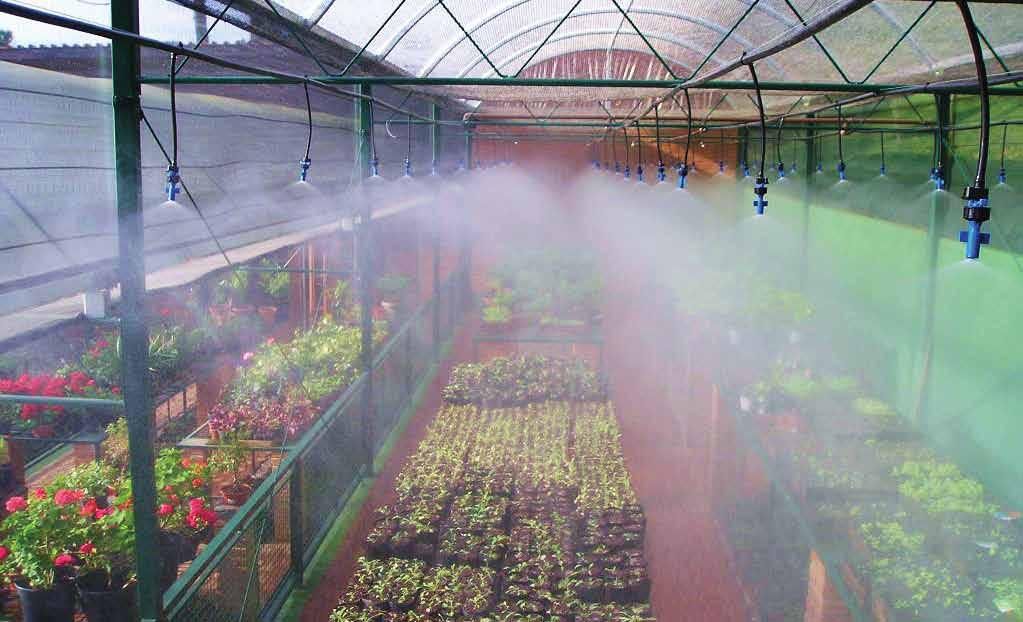
Misting systems are today considered one of the most effective methods of evaporative cooling, humidity control, and particulate reduction in a variety of environments. From greenhouses and livestock farms to outdoor restaurants and semi-industrial spaces, the actual performance of these systems is directly dependent on the quality of the mist produced. Contrary to popular belief, the main factor in producing a uniform mist is not the nozzle alone; rather, the stability of the pressure provided by the pump determines the final quality of the spray. Even the most advanced nozzles will produce coarse droplets instead of mist if the pressure is unstable. In this article, the performance of a misting machine and misting pump is examined from a fluid physics perspective, and then the types of pumps are compared from an engineering perspective to show why diaphragm pumps — and in particular LEFOO brand products — are a very suitable choice for many misting systems.
The nature of fogging and the actual requirements for fog production
The goal of fogging is to convert liquid water into microdroplets that evaporate before hitting the surface. This rapid evaporation reduces the ambient temperature by absorbing latent heat.
Spray behavior studies show that with increasing water pressure:
- Output speed increases.
- The spray angle changes.
- The droplet size decreases.
Droplet shrinkage is the main condition for rapid evaporation.
Actual pressure range of the fogger
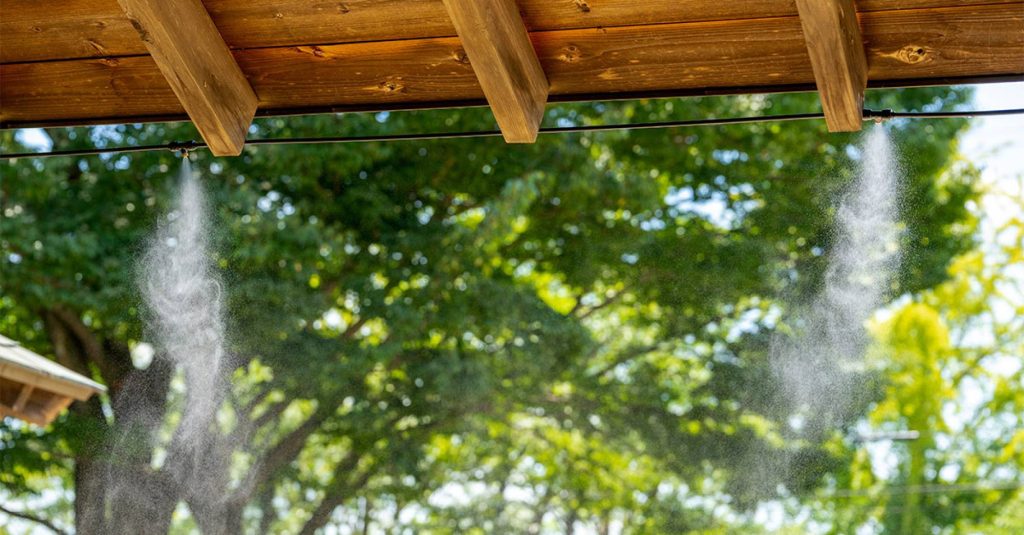
Suitable pressure for fogging system (according to technical sources) :
- Low pressure :
1.5–3 bar (20–40 PSI)
suitable for simple humidification — does not produce true mist and the environment becomes wet. - Medium pressure (most common) :
5–8 bar (70–120 PSI)
suitable for cafes, restaurants, greenhouses, livestock and semi-industrial spaces — good balance between cost and performance. - High pressure (true fog) :
17–70 bar (250–1000 PSI)
produces very fine droplets, rapid evaporation and strong cooling without wetting, but at a high cost.
So for most practical applications, a pressure of around 80 to 120 PSI, about 6 to 8 bars , is the best and most standard choice.
Also, the more stable the pressure, the more uniform the droplet size will be.
The three key parameters of fog quality are:
- Stable pressure
- Controlled flow
- Minimum current fluctuation
Pressure fluctuations directly cause nozzle dripping, increased water consumption, and reduced efficiency
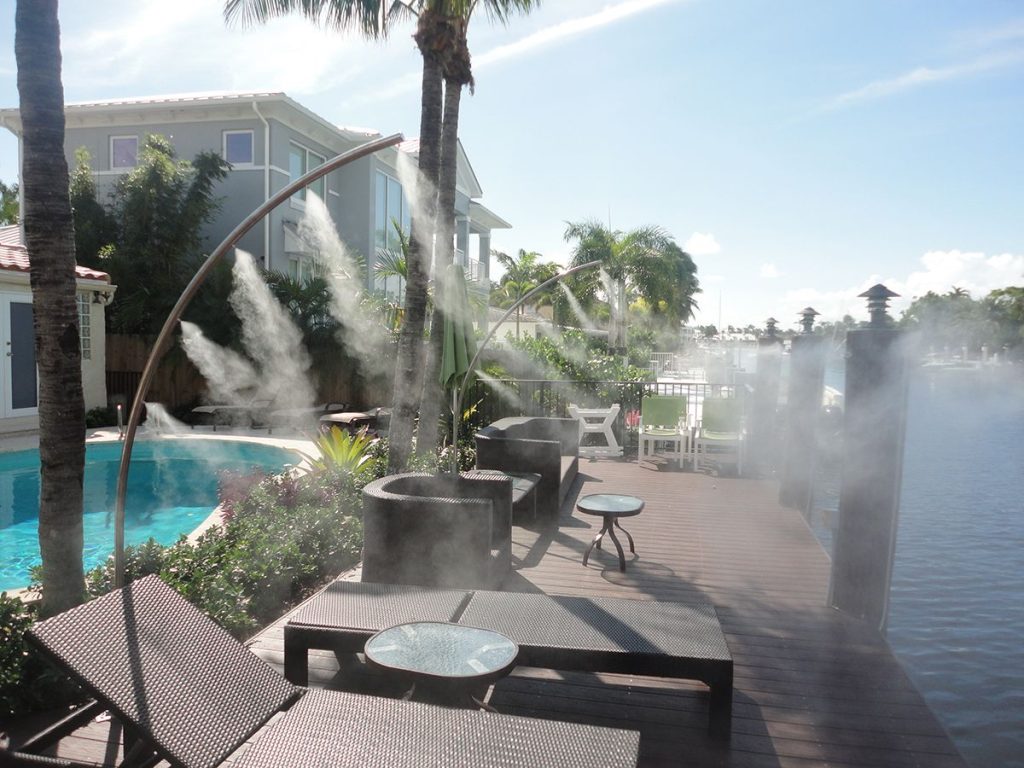
Engineering review of different types of misting pumps
Centrifugal pumps
These pumps are designed for high flow rates and low head . As the output resistance increases (such as a fog nozzle), their pressure drops. For this reason, they are usually not suitable for real fogging.
Piston or plunger pumps
Plunger pumps are capable of producing very high pressure and are used in heavy-duty industrial fogging systems.
Advantages:
- Too much pressure
- Strong atomization
Limitations:
- Vibration and loud noise
- Higher initial and maintenance costs
- Sensitivity to water quality
These pumps are usually chosen for extensive and permanent applications.
Diaphragm pumps
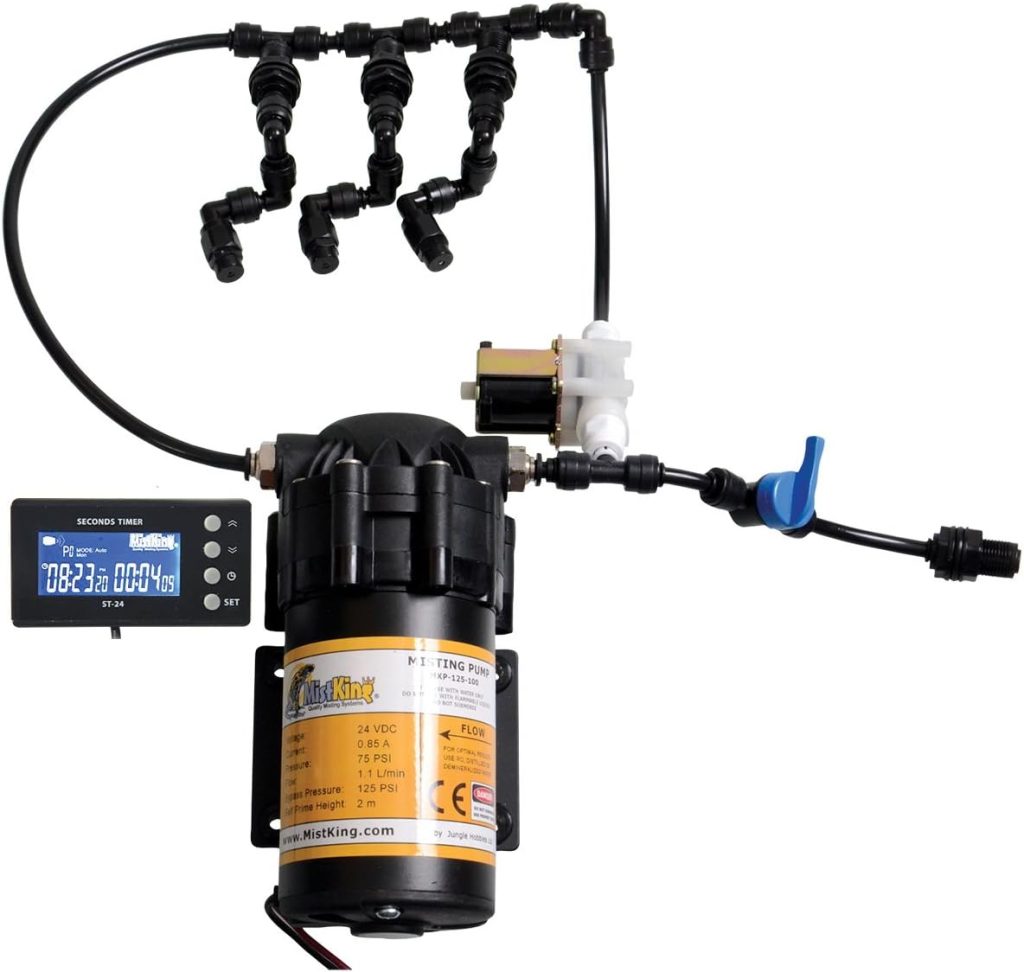
A diaphragm pump is a positive displacement pump that moves fluid by the reciprocating motion of a diaphragm.
Important engineering features:
- Self-suicidal (no need for initial pressure)
- Ability to work against back pressure
- Complete sealing and no leaks
- Suitable for medium pressure with controlled flow rate
These characteristics have made them widely used in reverse osmosis and fluid injection systems. Diaphragm pumps are also widely used as misting pumps.
Why is the diaphragm pump structure suitable for many foggers?
The misting nozzle is essentially a flow restrictor . In such a situation, the misting pump must be able to withstand the outlet resistance.
Diaphragm pumps, because they are positive displacement pumps:
- There is no significant performance loss with increasing output resistance.
- Capable of creating uniform pressure in small dimensions
- They are self-destructive (an important advantage in small tanks)
The flexible movement of the diaphragm provides some hydraulic damping and can reduce oscillations; however, in poor designs, flow pulsation may also occur.
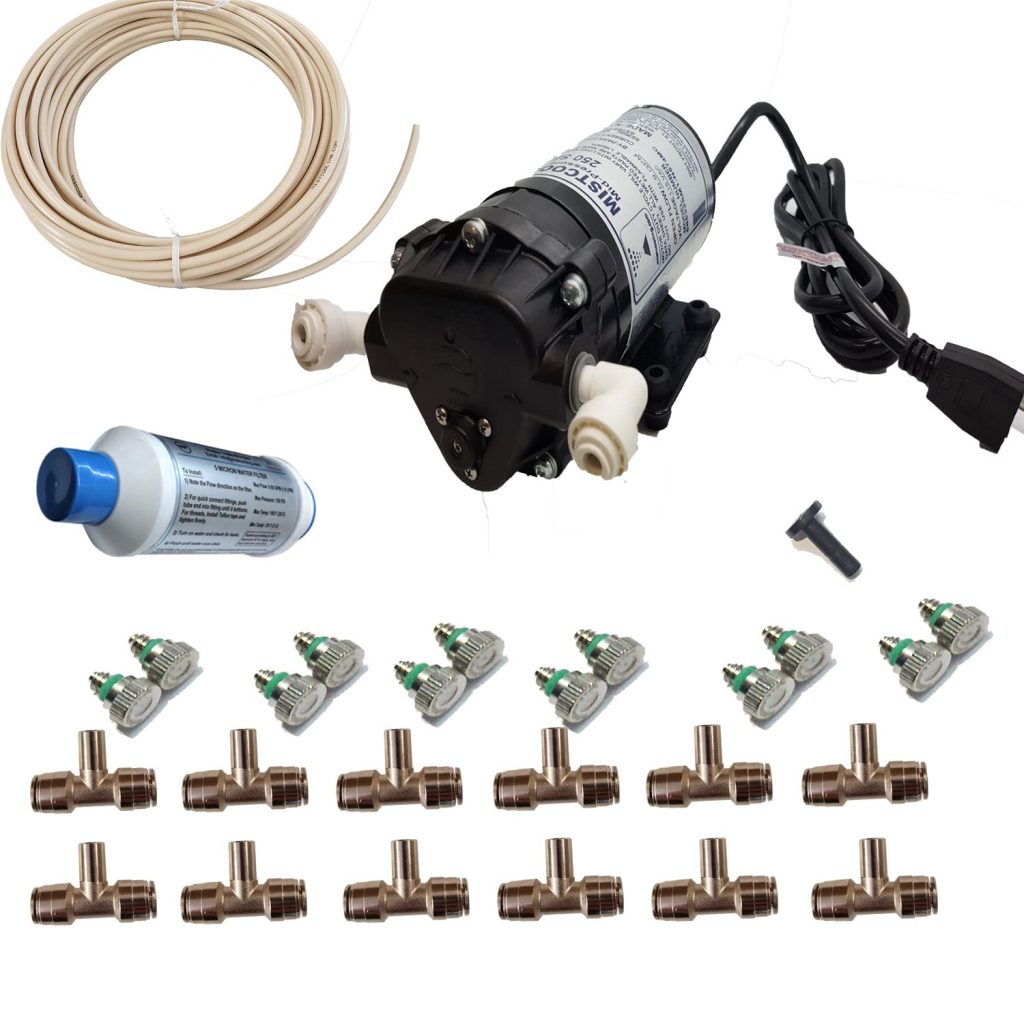
Not all diaphragm pumps are the same.
Technical sources indicate that the performance of these pumps is highly dependent on the internal design. The main differences arise in the following:
- Motor and coil quality
- Diaphragm material
- Pressure control system
- Low motor winding temperature
Weak pumps usually experience a pressure drop after a short period of time, which is directly visible in the change in fog size
.
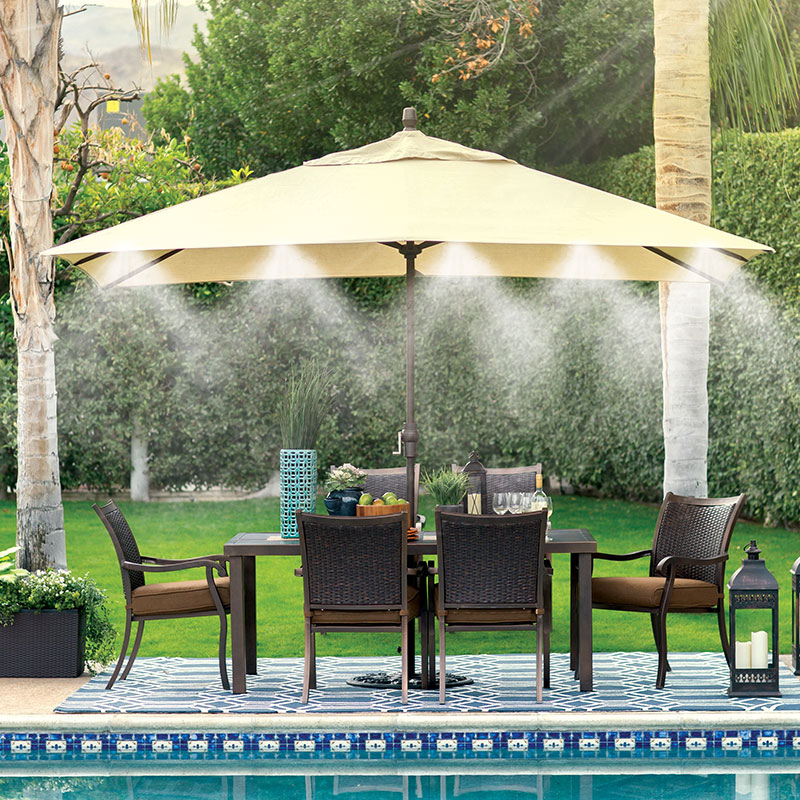
Technical reasons for the proper performance of LIFO pumps in fogging
Lifo pumps were originally developed for applications that require stable pressure in compact dimensions ; a feature that aligns with the needs of many greenhouse and semi-industrial foggers.
1. Working pressure stability
Precise pressure control ensures uniform droplet size and reduces nozzle drips.
2. Adequate thermal efficiency
The pump does not get hot, allowing for long-term operation.
3. Less vibration and smoother flow
Reduced vibration is a sign of better hydraulic stability and spray uniformity.
4. Durability in continuous operation
Higher build quality maintains output pressure over time and reduces the need to re-adjust the system.
Engineering Conclusion About Misting System Pump
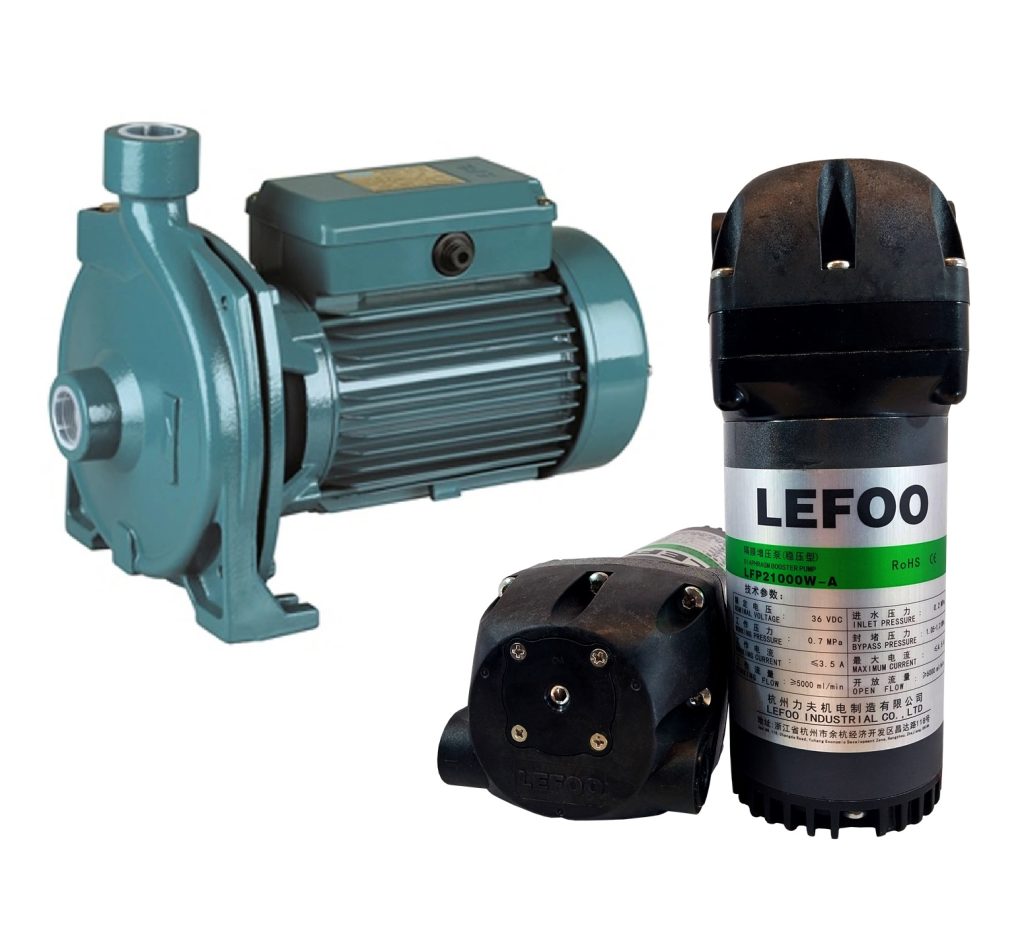
Technical analysis of droplet behavior and pump performance shows:
- True fog production is dependent on sustained pressure , not just nozzle type.
- Centrifugal pumps have limitations for this application.
- Piston pumps are suitable for very high pressures but are not economical for small systems.
- Diaphragm pumps provide the best balance between size, energy consumption, cost, and pressure stability in many home, greenhouse, and semi-industrial foggers.
Meanwhile, pumps that are specifically designed for consistent pressure—such as Lifo diaphragm pumps—can ensure more uniform fog, more efficient water consumption, and more stable fogging system performance.